Site Map Icon
RSS Feed icon


May 22, 2013
Contact Congress!
Enter Zip code:
Department & Divisions

President
Feb 07, 2008

Download: doc20120511120656.pdf , Pres. report 9.12.pdf

Vice President
Feb 07, 2008
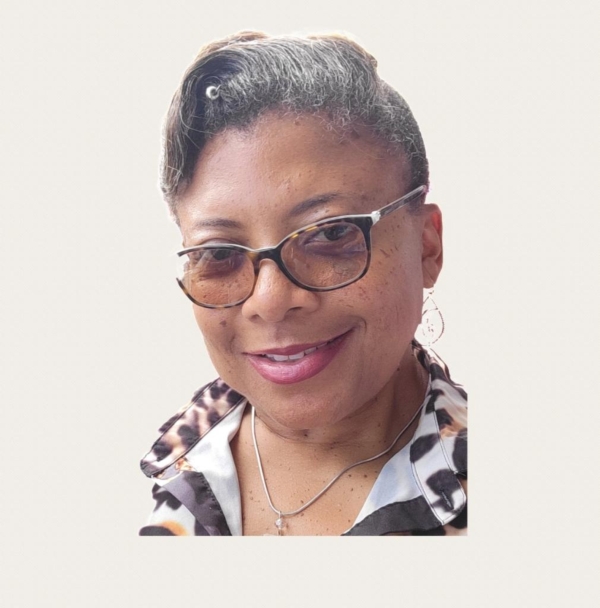
                                                                                                                Jacque' Stewart-Harris-Executive Vice-President   


Secretary-Treasurer
Feb 07, 2008
HAPPY NEW YEAR!  Here's hoping that everyone will focus on positive solutions that will be in the best interests of the membership in order to meet the challenges that we face in 2010.  This is no time to implement personal or political agendas.  For Your Information:-Union meetings take place on the second Tuesday of each month at 3829 Carnegie Ave
Download: doc20090414160111.pdf , doc20090618121329.pdf

Director of Research & Education
May 16, 2012

BENEFITS OF A UNION

Unions are about a simple proposition: By joining together, working women and men gain strength in numbers so they can have a voice at work about what they care about. They negotiate a contract with their employer for things like a fair and safe workplace, better wages, a secure retirement and family-friendly policies such as paid sick leave and scheduling hours. They have a voice in how their jobs get done, creating a more stable, productive workforce that provides better services and products. Always adapting to the challenges of our nation’s evolving workforce, unions are meeting the needs of workers in today’s flexible and nontraditional work environments. Because no matter what type of job workers are in, by building power in unions, they can speak out for fairness for all working people in their communities and create better standards and a strong middle class across the country.

There is now a substantial body of research evidence on the economic impact of U.S. unions. Unions typically:

– Raise the wages of the employees they represent;

– Increase the fringe benefits of those same employees, usually by a greater extent than they increase wages;

– Reduce income inequality within the represented firm, by reducing differentials between low-paid and high-paid employees, men and women, various racial/ethnic groups, younger and older employees, and so forth;

– Increase pay of nonunion workers in occupations and industries with substantial union presence as nonunion employers move closer to union standards;

– Reduce income inequality in the wider society by reducing inequality not only within and between represented firms, but also across entire industries as nonunion employers increase compensation to discourage unionization, all of which strengthens the middle class (Card, Lemieux, and Riddell, 2007).

– Reduce employee turnover by lessening the number of quits (voluntary separations); and

– Thus increase the retention of skilled employees, enhancing human capital and productivity in both the firm and the economy as a whole;

(Sources:  Freeman, Richard B. and James L. Medoff. 1984. What Do Unions Do? New York, Basic Books.  Bennett, James T. and Bruce E. Kaufman, eds. 2007. What Do Unions Do? A Twenty-Year Perspective. New Brunswick, NJ, Transaction Publishers.)

Right To Work States

Conservatives like to talk about how RTW gives employees a choice when it comes to joining unions, but in reality, RTW is simply a choice between paying dues or freeloading off of those who do. The unions exist to increase labor's share of the pie, and union workers enjoy higher wages than non-union workers even after dues are taken out. Median weekly earnings are 28 percent higher for union workers, while dues are typically no more than 5 percent of yearly income.

Wages in RTW states are 3.2 percent lower than in non-RTW states, and the rate of employer pensions and health benefits are lower as well. RTW does not give more choice to the worker — it gives more power to the employer. The last leg of the country's dying unions is the right to collective bargaining, and this legislation cripples unions' ability to do just that. Business owners have every right to negotiate contracts with workers fairly, but workers need unions to have their fair shake at the bargaining table. Republicans talk a lot about helping employers create jobs, but what’s the purpose of more jobs if workers can't live on their wages? Henry Ford invented the automobile, but the UAW ensured that Michigan's labor force received their share of the profits.

UNION HISTORY (taken from OPWU website)

Knowing the Past Leads to a More Secure Future

It has been often said that most postal employees have no idea of the struggles that took place in order to gain the wages & benefits currently enjoyed by us all. I believe that to be true, and it is a shame because understanding those struggles would enable anyone to have a better appreciation for the union and the brave men and women who continue to fight for justice for all postal workers.

We should look at the past so that we can truly appreciate what the union has done for all postal workers.

Before 1970

In the early 1900s postal employees worked under terrible conditions, often not even having heat in the buildings where mail was processed. They earned less than $1000 a year without any kind of job protection. The first postal union was formed in Chicago, Illinois in 1907. However, it took until 1962 for the unions to be officially recognized by the government.

In 62' President John F. Kennedy signed Executive Order #109988 which officially recognized the role of unions in the Postal Service. During a certification vote more than 77% of eligible employees voted for union representation. Six unions were made the exclusive bargaining agents and allowed to negotiate for working conditions, grievances, and safety, but not for wages and benefits! Congress still had the final decision about giving workers salary increases.

1970

By March of 1970 employees could no longer stand deplorable working conditions and low salaries. They were paid so little that in major cities postal employees qualified for the food stamp program. Finally, on March 18, 1970 a strike began that would become the only nationwide walkout in the history of the United States Postal Service! At first President Richard Nixon tried to process and deliver the mail using federal troops. That just made the situation worse and led to massive mail backlogs. It only took about two weeks for the government to realize the strike needed to be settled. This led to the Postal Reorganization Act that made the USPS an independent government agency and authorized the Unions to be able to negotiate for wages and fringe benefits.

It also said that postal management must bargain in good faith and any unresolved issues would be sent to binding arbitration. In exchange for the right to negotiate wages & benefits, the Act included a no-strike clause. Now, 40 years later (2010), the unions representing postal workers are among the few government unions allowed to negotiate wages.

Post 1970

In July of 1971 five unions merged to form the APWU. The United Federation of Postal Clerks, National Postal Union, National Association of Post Office & General Service Maintenance Employees, National Federation of Motor Vehicle Employees, and the National Association of Special Delivery Messengers. They represent today what is the largest postal union in the world.

The first contract that included wages & benefits came in 1971. Looking at the information below, it is very easy to see why the Union can rightfully claim to have represented our membership well.

Using the example of a Level 5 - Step O employee, just look at what has been accomplished: (examples are annual salaries)

1971             1973          1975         1978           1981           1984             1987

$9907         $11773      $13883     $15483       $18311       $19564         $25037

1990             1994           1998         2000           2006           2009

$29249       $33067       $37831    $40472        $48620       $53102*

* - includes a level upgrade from 5 to 6

This proves the Union certainly delivers for the membership!!!

Do you realize that in addition to salary the Union also negotiates for the following benefits:


Sunday Premium

Night Shift Differential

Annual Leave

Sick Leave

Holidays

Health Insurance Premiums

Life Insurance

Retirement

Overtime Regulations

Clothing Allowance

Travel Pay

Injury Compensation

Level Upgrades

Higher Level Pay

Subsistence Pay

Transportation Pay


And, many, many more items


Is it even possible to think that if the Unions did not have this negotiating power, would the Postal Service be that generous with its employees? I certainly don't think so and there is a very good example to use as comparison - casual employees. If postal management had its way, all employees would be casuals making $10 an hour.

Today we continue to represent workers to the best of our ability. We are faced with a new set of challenges - mail processing consolidation, station/branch closings, poor financial condition of the USPS, automation, etc. - and those challenges will keep us more than busy. In order for the union to continue to effectively represent postal workers, we need the involvement of everyone. If you belong, thank you. If you are a non-member, please join.


Financial Secretary
Apr 01, 2008


JANET WITHERS, FINANCIAL SECRETARY


Director, Clerk Craft
Feb 07, 2008
January 2013 Clerk Craft Report
Download: 20130109_102113.pdf

Vice President of Clerk Craft
May 16, 2012

Maintenance Craft
May 01, 2008
Bids (Closing Date 12/15) PAR and PER Results
Download: doc20120514144320.pdf , doc20120622090900.pdf , 20121204_164204.pdf

Vice President of Maintenance
May 16, 2012

Director Motor Vehicle Craft
Apr 01, 2008

Richard "Rich" Olson, Director                        


Vice President of Motor Vehicles
May 16, 2012

President of Retirees
Sep 18, 2008


Velma R. Chism, Vice-President


Page Last Updated: Sep 13, 2012 (08:19:00)
Member Login
Username:

Password:


Not registered yet?
Click Here to sign-up

Forgot Your Login?
<< May 2013 >>
S M T W T F S
1 2 3 4
5 6 7 8 9 10 11
12 13 14 15 16 17 18
19 20 21 22 23 24 25
26 27 28 29 30 31
Elections
President of the United States of America
Senator for the State of Ohio
>>View All
Site Search
Site Map
RSS Feeds
Weather Report
  UnionActive Newswire  
 
Join the Newswire!
Updated: May. 21 (21:01)

2013 El Paso Police Memorial - Friday, May 24th at 9 AM
El Paso Municipal Police Officers' Association
5K FUN WALK/RUN FOR DALTON FORD
IUEC Local 10
Fight for your Job Security!
CWA Local 1103
LOCAL 117 WELCOMES NEW POLITICAL ACTION COORDINATOR
Teamsters Local 117
Joe Mayhew Elected 1103 Secretary Treasurer
CWA Local 1103
Unions break ranks on ObamaCare
UFCW Local 1994 MCGEO


APWU Cleveland Area Local
Copyright © 2013, All Rights Reserved.
Powered By UnionActive™
Visit Unions-America.com!

Top of Page image